

Sports marketing is about more than promoting a game or selling tickets. It combines branding, digital marketing, partnerships, and community engagement to help athletes, teams, and sports organizations grow their visibility and create new opportunities.
Whether you are an athlete building your personal brand, a coach growing a basketball program, or an organization looking to reach a wider audience, the right sports marketing strategy can help you stand out.
At SPORTMARKS, we believe sports offer opportunities far beyond competition. Here are five powerful ways to use sports marketing to strengthen your brand and turn potential into opportunity.
Table of Contents
1. Build a Strong Brand Identity
A strong brand helps people understand who you are, what you represent, and what makes you different.
For athletes, branding goes beyond performance on the court or field. It includes personality, values, interests, achievements, and the story behind the athlete. For teams and organizations, a recognizable identity helps create consistency and build trust with players, parents, fans, and partners.
Start by defining what you want your audience to associate with your brand. Use consistent visuals, messaging, and storytelling across your website and social media channels.
Why it matters: A clear identity makes your brand easier to recognize, remember, and connect with.
2. Use Social Media and Digital Marketing
Social media gives athletes, teams, and organizations a direct way to communicate with their audiences. It can showcase achievements, share behind-the-scenes moments, promote upcoming events, and build relationships with supporters.
An effective digital marketing strategy starts with consistency and purpose. Instead of posting simply to stay active, create content that supports a clear goal.
For example, athletes can share training routines, personal milestones, and their journeys beyond competition. Basketball programs can highlight players, announce tryouts, and share camp information. Sports organizations can use websites, email campaigns, and social media to reach new audiences.
Focus on the platforms your audience uses and track which content generates meaningful engagement.
Why it matters: Consistent, relevant content helps increase visibility and keeps your audience connected to your brand.
3. Create Meaningful Partnerships
Sports partnerships connect athletes, teams, and organizations with brands that share their audiences, interests, or values.
These partnerships can include sponsorships, product collaborations, community initiatives, and promotional campaigns. They do not always require a large following or a major professional contract. Smaller athletes and local sports programs can create value by connecting with businesses that want to reach their communities.
Start by identifying potential partners whose goals align with yours. Develop a clear proposal that explains who your audience is, what you offer, and how the partnership could benefit both sides.
For athletes, a professional online presence and a clear personal brand can help demonstrate value to potential sponsors.
Why it matters: The right partnerships can expand your reach, strengthen credibility, and create opportunities for long-term growth.
4. Promote Camps and Events
Camps, clinics, tournaments, and community events create opportunities for athletes to develop their skills and connect with others. However, a successful event requires more than good planning. People need to know about it, understand its value, and have a clear way to participate.
Sports marketing helps communicate that value. Start with a clear message about who the event is for, what participants will gain, and how they can register.
Use social media, email communication, local partnerships, and consistent promotional materials to reach your target audience. Share important details early, answer common questions, and provide reminders as the event approaches.
After the event, share highlights and feedback to build credibility and generate interest in future opportunities.
Why it matters: Effective promotion helps reach the right participants, strengthen community relationships, and build momentum for future events.
5. Build Community and Measure Results
Sports have a unique ability to bring people together. Strong sports marketing uses that connection to build a community around an athlete, team, program, or organization.
Engage with your audience by responding to comments, celebrating achievements, highlighting participants, and sharing stories that reflect your values. Community engagement should be an ongoing effort, not just part of a promotional campaign.
It is also important to measure your results. Depending on your goals, useful metrics may include website visits, social media engagement, audience growth, camp registrations, email performance, and partnership inquiries.
Review these results regularly to understand what is working and where you can improve. Use those insights to refine your content, adjust your strategy, and make better decisions over time.
Why it matters: Strong relationships build loyalty, while measurable results help ensure your marketing efforts support real goals.
How SPORTMARKS Can Help
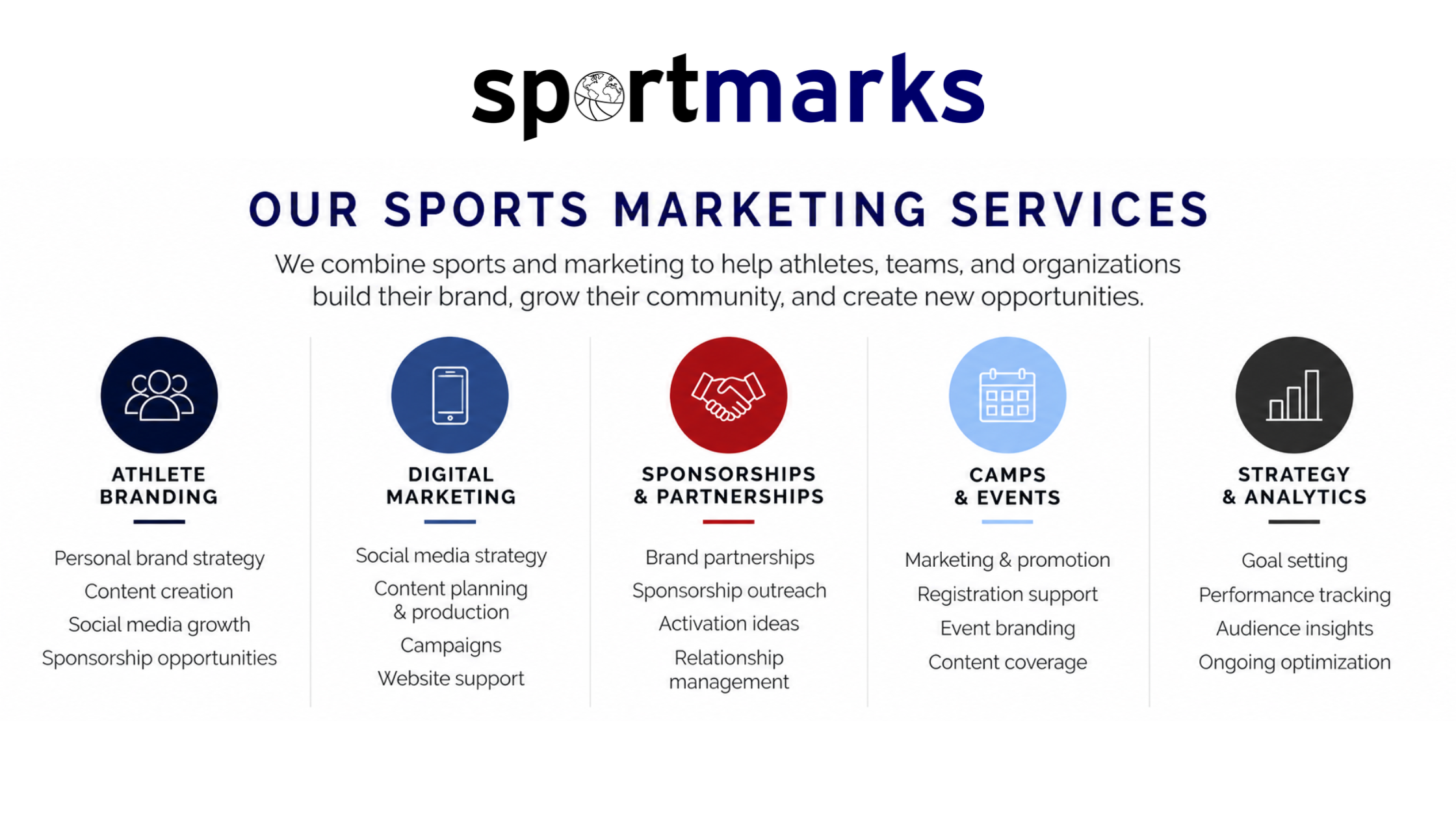
Sports marketing turns ideas into action by connecting the right strategy with the right audience. At SPORTMARKS, we combine sports and marketing to help athletes, teams, and organizations build their brands, grow their communities, and create new opportunities.
From athlete branding and digital marketing to partnerships, camps, and events, we help bring your vision to life.
Whether you are an athlete looking to strengthen your personal brand, a coach planning a camp, or an organization ready to grow, SPORTMARKS can help you take the next step.
Ready to grow your brand? Explore our marketing services to see how we can help you reach your goals.
SPORTMARKS — Making Sports Bigger Than the Game.
*Want to learn more about the fundamentals? Read this guide to sports marketing by MKTG Insight for additional insights.